Why face tracking if you have cards
Cards solve access, not attendance. Colleagues clock in for each other, cards get lost, timekeepers reconcile data by hand.
- Nobody can clock in for someone else
- No cards to issue and reissue
- Timesheets are built by shifts and schedules
- Late arrivals and early leaves are visible the same day
How it is built
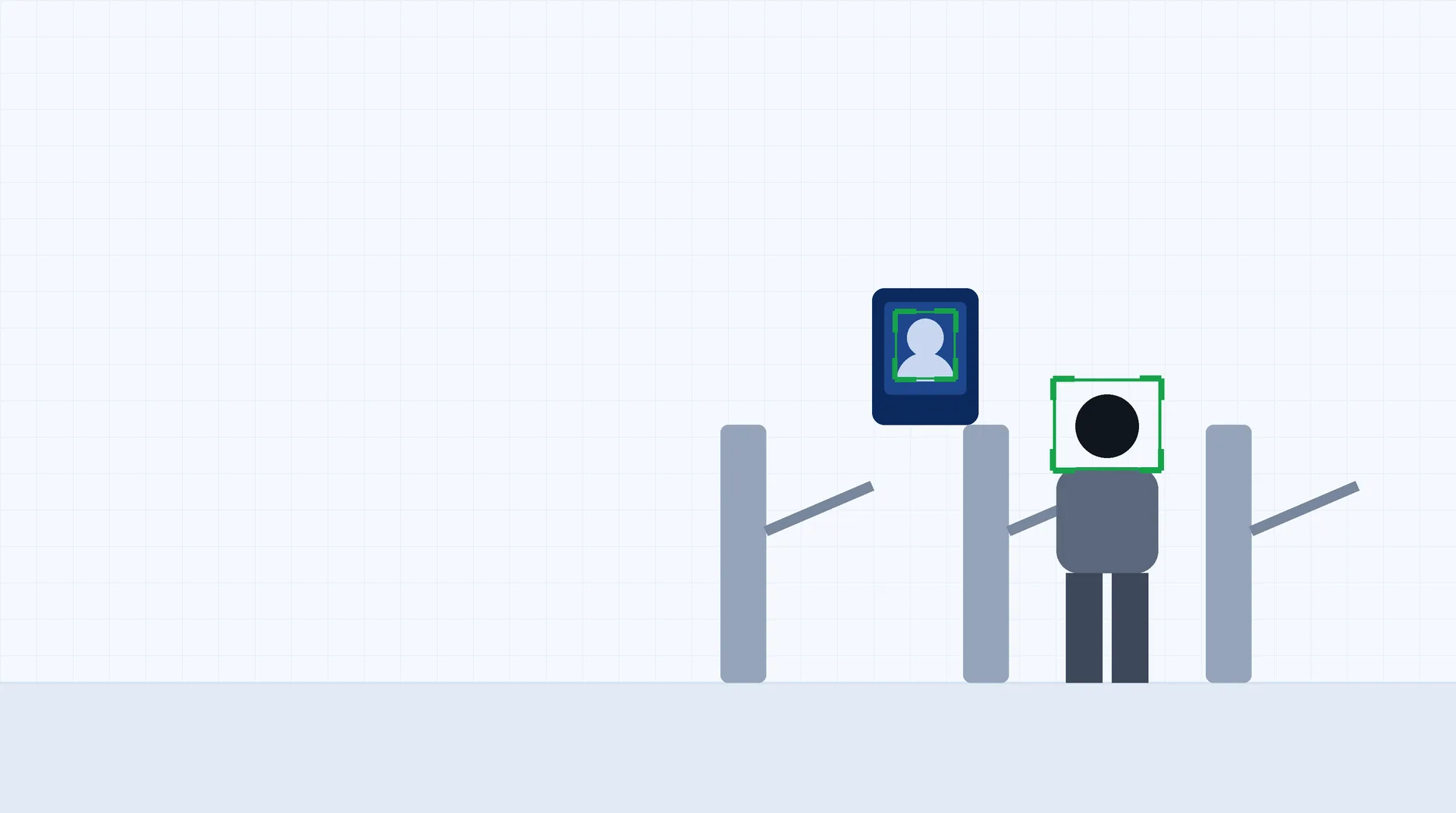
A face recognition terminal is installed at the gate or a camera above the turnstile. Each employee is photographed once, 3-5 shots. The system then recognises them in a fraction of a second and logs who, when, through which gate, in or out.
- Turnstile terminal: recognises at 0.3-1.5 m, rejects photos (liveness check)
- Site cameras: recognise staff and flag strangers
- On-site server: stores the face base and events, builds timesheets
- Telegram: late arrivals, unknown person, daily summary
To open the turnstile by face, see face recognition access control.
Biometrics and the law
A face is biometric personal data. Under Kazakhstan's law on personal data, employees must give written consent. We provide a consent template and storage rules: the face base stays only on your server.
Pricing
Price depends on the number of gates and employees. Standard path: a 30-day pilot at one gate, then plant-wide rollout. See industrial video analytics pricing.
Questions and answers
Does it recognise people in helmets or with a beard
Yes, if the central part of the face is visible. When appearance changes, the system adds new samples automatically.
How many employees can it handle
Thousands. Recognition takes under 0.2 seconds, no queue at the gate.
Can it be fooled with a photo
Terminals with liveness detection reject photos and videos from a phone.
What if the internet goes down
Tracking works locally. Events are stored and notifications are sent when the connection returns.